



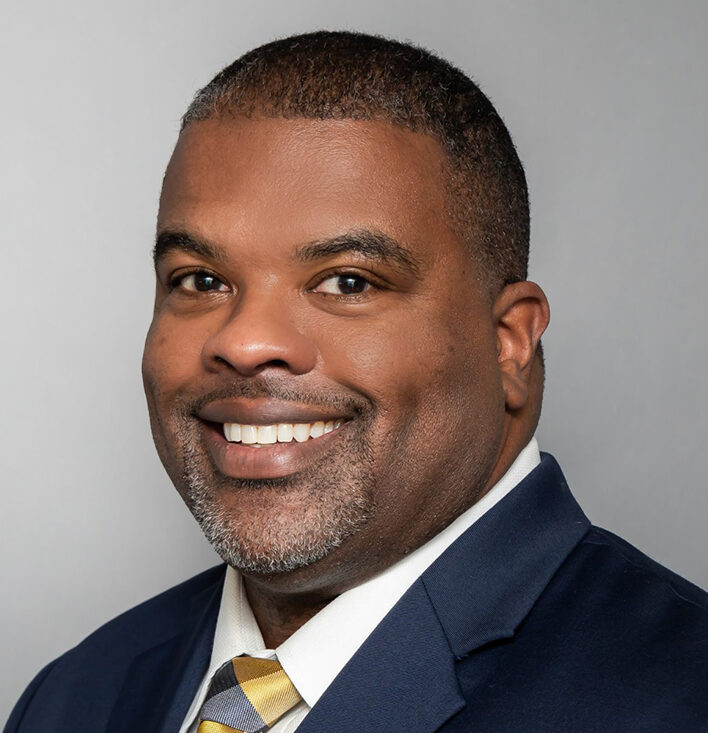
Troy Woodard, MD
Rhinology and Endoscopic Skull Base Surgery
Specialties
Otolaryngology
Gender
Male
Biography
Dr. Troy Woodard has brought his high-quality clinical experience in otolaryngology-head and neck surgery to ECMC where patients will benefit from his deep expertise in complex sinus and skull base disorders — including chronic sinusitis, nasal polyps, cerebrospinal fluid leaks, and sinonasal tumors. Dr. Woodard is an internationally respected surgeon, educator and physician-leader whose career reflects excellence, innovation and a deep commitment to advancing care and training the next generation. Dr. Woodard, along with Dr. Matthew Kabalan, will lead ECMC’s Center for Sinus and Skull Base Surgery with a focus on Rhinology, which is a subspecialty focused on treating diseases affecting the paranasal sinuses and the anterior skull base. Rhinologists utilize minimally invasive, endoscopic techniques to address many conditions, including but not limited to, complicated sinus disease; cerebrospinal fluid leaks; and sinus, nasal, and skull base tumors.
With deep expertise in complex sinus and skull base disorders — including chronic sinusitis, nasal polyps, cerebrospinal fluid leaks, and sinonasal tumors — Dr. Woodard focuses on minimally invasive, image-guided techniques that enhance safety and speed recovery. His impact extends beyond the operating room: he has delivered hundreds of invited lectures worldwide and authored an extensive collection of peer-reviewed publications and book chapters, driving innovation in sinus and skull base surgery.
Dr. Woodard possesses an impressive record of leadership and innovation. At the Cleveland Clinic, he spearheaded rhinology, sinus and skull base surgery as section head, directed operations at the Beachwood Ambulatory Surgery Center, and served as a full professor at the Cleveland Clinic Lerner College of Medicine of Case Western Reserve University. His influence has shaped the future of the specialty. He also served as president of the American Academy of Otolaryngology–Head and Neck Surgery (AAO-HNS) — the world’s largest professional society in the field, representing over 14,000 members globally. His election was groundbreaking: only the second African American and among the youngest physicians ever to hold this prestigious role in the academy’s 129-year history.
At the Jacobs School of Medicine and Biomedical Sciences at the University at Buffalo, Dr. Woodard serves as chair of the Department of Otolaryngology and is physician executive for UBMD Otolaryngology.
Conditions Treated by Dr. Troy Woodard
Sinus/nasal
- Chronic sinusitis/rhinosinusitis of all causes
- Nasal polyps
- Deviated nasal septum
- Inferior turbinate hypertrophy
- Nasal/sinus mass or tumor, both benign and malignant
- Chronic rhinitis of all causes (allergic, vasomotor, etc.)
- Hyposmia/anosmia
- Epistaxis, including due to inherited conditions such as a hereditary hemorrhagic telangiectasia (HHT)
- Mucocele
Skull base
- Sinonasal cancers
- Intracranial and other skull base tumors – pituitary tumors, meningioma, craniopharyngioma, chordoma, and more
- Cerebrospinal fluid leaks from the nose, including spontaneous, posttraumatic, iatrogenic
Orbit – certain eye pathologies can be accessed and treated through an endonasal endoscopic approach
- Epiphora / nasolacrimal duct obstruction / excessive tearing
- Thyroid eye disease / Graves orbitopathy
- Orbital tumors (in select cases)
Common Rhinology Procedures Performed – Note that the following procedures are all performed endoscopically through the nose
- Resection of central nervous system and skull base tumors accessible through the nose, in conjunction with neurosurgery
- Sinus surgery
- Nasal airway surgery (e.g., septoplasty, inferior turbinate reduction)
- Repair of cerebrospinal fluid leaks
- Medial orbital decompression
- Dacryocystorhinostomy
- Control of epistaxis, including sclerotherapy for HHT
- Posterior nasal nerve ablation
- Resection of sinus/nasal tumors